
After the Low VIX

Key points
- VIX sits at the bottom of its 126-day range while SKEW's six-day change surged and component correlation dropped in a single day
- Across the three conditions, the average maximum first-month drawdown after signals sat near 1.4%
- In the 10 complete extreme cases, most kept a short buffer period, and the worst case later fell toward 6%
- This is a state where risk can be delayed
A calm that looks like a contradiction
On August 11, Jay Kaeppel noted that history gives the VIX a reasonably large chance of a 35% or larger spike between now and mid-October. We looked at the VIX from another angle. On August 12, VIX sat at its lowest level of the past six months. The six-day SKEW change moved above 8. The one-day component correlation change fell below -6.
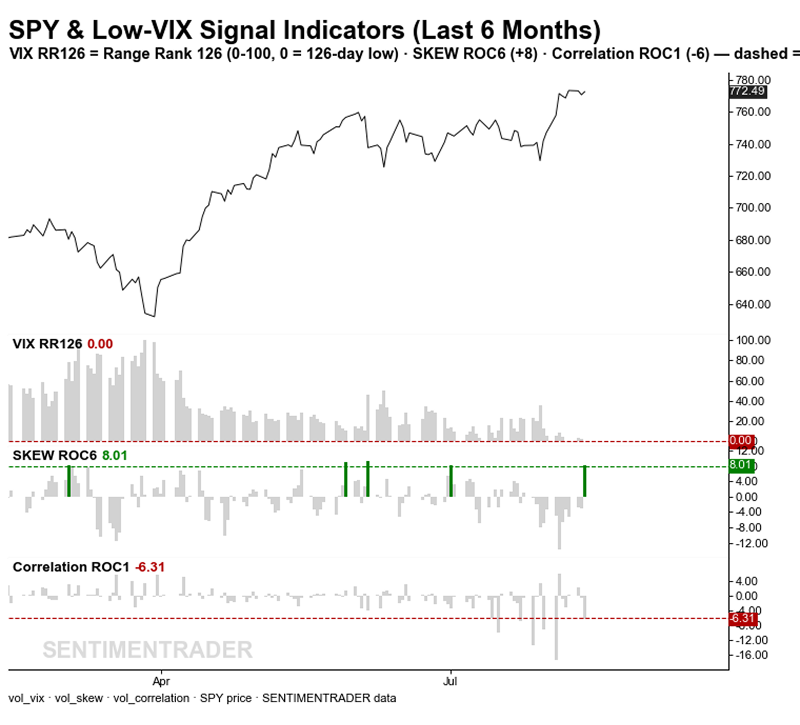
The question is, with VIX already this low, options tail risk rising short term, and the index's internal structure still deteriorating, how does the market react, or does the low-volatility state's own inertia remain the relatively dominant factor?
The baseline for a low VIX
A VIX below 15 means the options market is already pricing low volatility, but that alone i